
Gen Z is no longer the next generation of consumers. They are already shaping culture, media, influence and spending behaviour.
Born into a world of smartphones, social platforms, streaming content and always-on connectivity, Gen Z has grown up with a different relationship to brands, entertainment, technology and identity. They are digital natives, but they are not one simple audience. They are a collection of fast-moving segments shaped by creators, platforms, gaming, nostalgia, social values and regional differences.
For brands and media teams, understanding the characteristics of Gen Z is no longer optional. Gen Z is already one of the most influential consumer groups in the world, and its spending power is expected to grow significantly by 2030. World Data Lab estimate that Gen Z’s spending power will reach $12 trillion by 2030, while also describing Gen Z as roughly born between 1997 and 2012 and representing around 25% of the global population.
The TelmarHelixa Gen Z Report is packed with audience insights to help brands understand what this generation cares about, where they spend their time and how they engage with the world around them. This article explores eight key characteristics of Gen Z and what they mean for brands, agencies and media teams.
What are the main characteristics of Gen Z?
The main characteristics of Gen Z include digital fluency, constant connectivity, creator influence, nostalgia, gaming participation, heavy social and video consumption, social awareness and regional variation. Gen Z is not a single audience. It is a diverse generation shaped by platforms, communities, culture, values and media habits.
Who is Gen Z?
Generation Z, most commonly referred to as Gen Z, is generally defined as the generation born after Millennials and before Generation Alpha. Pew Research Center uses 1996 as the final birth year for Millennials, meaning anyone born from 1997 onward is part of the next generation.
That means the eldest members of Gen Z are now adults, entering established careers, households and higher spending years. The youngest are still teenagers, forming brand preferences, media habits and cultural identities that may influence their behaviour for years to come.
This is one of the reasons Gen Z matters so much. It includes both current consumers and future high-value consumers. It also includes an audience whose habits are already shaping how brands think about content, influence, social platforms, entertainment and media planning.
Why Gen Z is important for brands and media teams
Gen Z is growing in size, spending power and cultural influence.
TelmarHelixa research highlights that Gen Z accounts for more than 26% of the global population and is expected to become the largest generation in recorded history. It also references the estimate that Gen Z spending power will reach $12 trillion by 2030.
That commercial potential matters, but it is only part of the story.
Gen Z is also changing how audiences discover products, engage with media and decide which brands deserve attention. They do not simply move through a traditional funnel. They discover through creators, entertainment, gaming, communities, search, social content, friends and algorithm-led platforms.
Deloitte’s 2025 Digital Media Trends report describes social video platforms, creators and user-generated content as forces reshaping media and entertainment, with audiences spreading their attention across streaming, social, gaming, music, podcasts and other digital media.
For brands, this means Gen Z insight needs to move beyond surface-level generational stereotypes. It needs to become actionable audience intelligence.
Key Gen Z characteristics
Gen Z is digital-first, but not digital-only. They use technology to connect, discover, shop and express identity. They are heavily influenced by creators and musicians. They spend significant time with gaming, social video and online entertainment. They also care about social and environmental issues, but those priorities vary by market and segment.
For marketers, the lesson is simple. Gen Z cannot be reached through broad assumptions. Brands need to understand the specific behaviours, motivations and media habits that define different Gen Z segments.
| Characteristic | What it means | Why it matters |
| Gen Z is shaped by nostalgia | Many Gen Zers are drawn to brands, culture and entertainment from before or during their childhood | Nostalgia can create emotional relevance, familiarity and trust |
| Gen Z is always connected | Internet access, social platforms and digital content are part of daily life. | Digital touchpoints need to be planned as part of the full audience journey |
| Gen Z is influenced by creators and celebrities | Creators, influencers and musicians shape tastes, trends and purchase decisions | Influence strategies need to be audience-led, not just reach-led |
| Music shapes Gen Z culture | Musicians feature strongly among Gen Z’s most influential figures | Music, fandom and culture can be powerful routes into Gen Z attention |
| Gaming is central to Gen Z identity | Gaming is now a lifestyle, community and media environment, not just a hobby | Gaming audiences should be considered in media planning and brand activation |
| Gen Z consumes entertainment across digital platforms | YouTube, TikTok and social video play a major role in entertainment behaviour | Traditional media plans need to account for fragmented attention |
| Gen Z cares about social and environmental issues | Causes, values and identity matter to many Gen Z audiences | Brands need credibility, not performative messaging |
| Gen Z differs by region and market | Gen Z is not the same everywhere. Priorities and influencers vary by location | Campaigns need local nuance, not one-size-fits-all generational targeting |
1. Gen Z is shaped by nostalgia
One of the most interesting characteristics of Gen Z is their relationship with nostalgia.
The TelmarHelixa Gen Z Report found that almost half of Gen Zers in the US say they buy the brands they grew up with and that their parents used. That means brands such as Pokémon, MTV and Taco Bell remain culturally relevant, even though their original moments of peak popularity came before many Gen Zers were born.
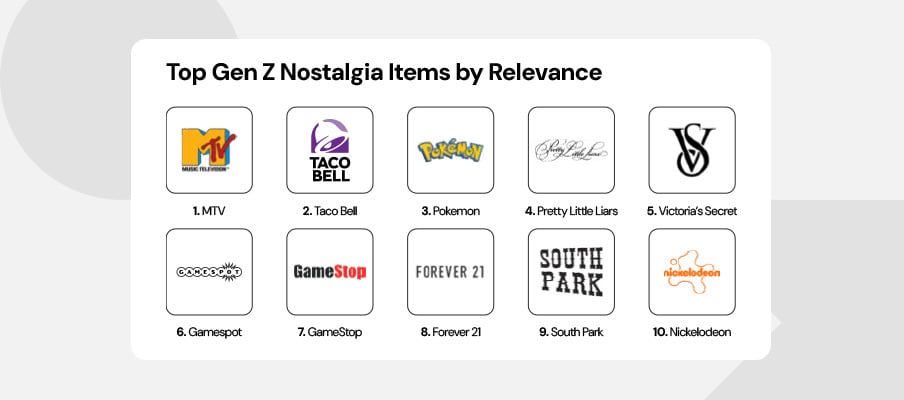
At first glance, this may seem contradictory. Gen Z is often described as future-facing, digital-first and trend-led. But nostalgia gives them something different. It offers familiarity, comfort and cultural reference points that feel easy to understand in a fast-moving world.
This trend may have been strengthened by the pandemic, when lockdowns and stay-at-home restrictions pushed people toward familiar pastimes, family habits and older entertainment formats. It may also reflect the way platforms constantly recycle culture, bringing older brands, music, aesthetics and formats back into new contexts.
For brands, nostalgia should not mean simply reusing old creative. The opportunity is to understand which parts of the past still carry emotional value and how those signals can be made relevant for Gen Z today.
What this means: Nostalgia can work when it feels authentic, recognisable and culturally relevant. It fails when it feels like a forced retro reference with no connection to the audience’s current identity.
2. Gen Z is always on and always connected
Gen Z has grown up with technology as a permanent fixture in everyday life.
80% of Gen Zers say it is important to have internet access when they are on the go. It also notes that 68% rely on the internet to connect with friends and family, while 62% say going online is their favourite thing to do.
This is one of the defining characteristics of Gen Z. Connectivity is not treated as an occasional activity. It is part of how they socialise, relax, discover, compare, learn and entertain themselves.
That does not mean every Gen Z campaign should simply be “digital.” It means digital behaviour needs to be understood in more detail. Which platforms matter? What role does each platform play? Where is the audience discovering content? Where are they being influenced? Where are they taking action?
What this means: Gen Z connectivity is not just about reach. It is about context. Brands need to understand when Gen Z is looking to be entertained, when they are looking for information, when they are connecting with communities and when they may be open to commercial messages.
3. Gen Z is influenced by creators and celebrities
Creators and influencers play a major role in shaping Gen Z’s tastes, trends and purchase decisions. 35% of Gen Zers say they are more likely to purchase products supported by their favourite celebrity. It also highlights the growth of the global influencer market, showing how creator-led influence has become a major force in modern marketing.
This matters because Gen Z often discovers brands through people, not just brand channels.
Creators can make products feel more relevant, human and culturally connected. They can also give brands access to communities that may be difficult to reach through traditional advertising alone.
Deloitte Digital’s 2025 State of Social Research found that 83% of consumers see the influencers or creators they follow as trusted sources of information. It also found that 61% of consumers discovered a new brand or product on social media in the past 12 months.
For Gen Z, this creator effect is especially important because influence is often built through familiarity, shared interests and perceived authenticity.
What this means: Creator strategy should not start with follower count. It should start with audience fit, cultural relevance, trust and the role the creator plays in the segment’s life.
4. Music shapes Gen Z influence and culture
Influencer is a broad term, but the TelmarHelixa Gen Z Report shows that music plays a particularly strong role in Gen Z influence.
Nine out of the top 10 influencers cited by Gen Z are musicians. The report also shows that Gen Z is 1.6 times more likely to be music lovers than the average consumer.
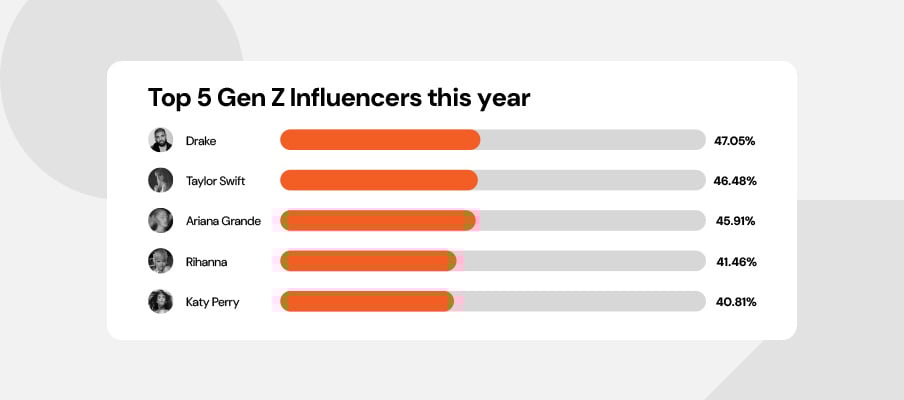
That is important because music is not just entertainment. For many Gen Z audiences, it is connected to identity, community, self-expression, fandom and social discovery.
The research also notes that eight out of the top 10 influencers are female, with Drake and Justin Bieber representing men on the list. Drake tops the global list of influencers among Gen Zers, while regional variations show that different figures can lead in different markets.
For brands, this shows why cultural context matters. Influence is rarely generic. It varies by audience, category, location and community.
What this means: Music and fandom can help brands understand what Gen Z pays attention to, but the right partnership depends on the segment. A global name may create awareness, while a more specific cultural figure may create deeper relevance.
5. Gaming Is More Than a Game
Gaming is one of the clearest examples of how Gen Z media behaviour has changed.
The TelmarHelixa Gen Z Report found that 86% of the global Gen Z population report playing video games regularly. Among regular gamers, 53% report spending more than $20 per month on gaming.
Gaming has moved from hobby to lifestyle. It is a form of entertainment, social connection, competition, identity and community.
Deloitte’s Digital Media Monitor also shows the scale of gaming among younger audiences, reporting that 90% of Gen Zs say they are gamers, with Gen Z and millennial gamers spending an average of eight hours per week playing video games.
For Gen Z, gaming environments can be as culturally important as social platforms, streaming services or music. popular genres include action and adventure games such as Pokémon, shooter games such as Call of Duty and sports games such as NBA 2K.
What this means for brands: Gaming should be considered part of the media landscape. For some Gen Z segments, it may be one of the most relevant places to understand attention, community and influence.
6. Gen Z consumes entertainment across digital platforms
Gen Z is an entertainment-first audience, but entertainment does not sit in one place.
TelmarHelixa research shows that Gen Z spends an average of nine hours on screens every day, roughly three hours more than the average person. It also notes that globally, 98% of Gen Zers spend most of their time on YouTube, followed by TikTok, Snap, Instagram and Facebook.
The shift away from traditional entertainment is also clear, with 61% of Gen Z TikTok users are more likely to watch content on TikTok than on TV, and only 11% of the global Gen Z population watched cable TV in the previous week.
Deloitte’s 2025 Digital Media Trends report supports this broader shift. It argues that social video platforms, creators and user-generated content are reshaping media and entertainment, and that younger audiences are engaging more evenly across streaming, social platforms, gaming, music and podcasts.
This has major implications for media planning.
Gen Z’s attention is fragmented across platforms, formats and devices. A plan that relies too heavily on one channel may miss how the audience actually moves through entertainment environments.
What this means: Media plans need to reflect how Gen Z consumes content across platforms. The question is not just “where can we reach Gen Z?” It is “where are different Gen Z segments most receptive, and what kind of content fits that context?”
7. Gen Z cares about social justice and environmental awareness
Gen Z is often described as a values-led generation.
That can be true, but it needs to be handled with care. Gen Z is diverse, and its priorities are not identical across countries, communities or audience segments.
The TelmarHelixa Gen Z Report found that Gen Z’s top five social issues are human rights, charity and poverty, medical and health organisations, religion and beliefs, and environmental organisations.
This suggests that Gen Z’s concerns are broad. They include identity, wellbeing, community, belief systems and the environment.
As digital natives, Gen Zers are also able to learn about causes, share information and mobilise through online platforms. That can make social and environmental issues more visible, more immediate and more connected to personal identity.
For brands, this does not mean every campaign should lead with purpose. It means brands need to understand when values matter to the audience, which values matter most and whether the brand has the credibility to speak about them.
What this means: Gen Z can be highly sensitive to inauthenticity. Values-based messaging needs to be backed by action, evidence and relevance to the audience segment.
8. Gen Z differs by region and market
One of the most important characteristics of Gen Z is that they are not the same everywhere.
The TelmarHelixa Gen Z Report highlights regional differences between Gen Z audiences in the US and Great Britain. While Gen Zers may share broad themes, such as advocacy for change and interest in social issues, their priorities differ by market.
For example, Great Britain shows stronger emphasis on community and social welfare, influenced by the country’s healthcare system and public services. In the US, Gen Z audiences tend to place more emphasis on individualism, personal expression, entrepreneurship and diverse career paths.
Influencer preferences also differ. Drake leads the global list of influencers among Gen Zers, while Gary Lineker is cited as the top influencer in Great Britain.
This is a useful reminder for brands. Generational labels can be helpful, but they can also become too broad. A Gen Z campaign built for one market may not translate cleanly into another.
What this means: Gen Z strategy should combine global understanding with local audience intelligence. Regional differences should shape messaging, creator selection, media planning and activation.
How to use Gen Z characteristics in media planning
Understanding the characteristics of Gen Z is useful. Turning that understanding into action is where the value is created.
For media teams, Gen Z insight should help answer practical planning questions:
- Which Gen Z segments matter most to the campaign?
- What behaviours make those segments distinct?
- Which channels do they use most?
- Which platforms influence them?
- What content formats hold their attention?
- Which creators, musicians or communities shape their preferences?
- How do their values differ by market?
- Where should budget be increased, reduced or tested?
This is where audience and media intelligence becomes important.
Gen Z is not one audience. A gaming-led Gen Z segment may behave very differently from a fashion-led segment, a social-justice-led segment, a music-led segment or a value-conscious shopping segment.
Each may need a different mix of channels, creative cues, influencers and messages.
How TelmarHelixa helps brands understand Gen Z
TelmarHelixa helps brands, agencies and media teams understand audiences with more precision.
Through Discover, Explore and Plan, teams can analyse Gen Z audiences, compare segments, understand behaviours and identify the media environments most relevant to different groups. The original page already connects the article to TelmarHelixa’s Gen Z Report 2024 and links to its product ecosystem, including Discover, Explore and Plan.
This matters because Gen Z insight needs to be more than a list of traits.
It needs to help teams make better decisions about segmentation, messaging, channel planning and cross-media investment.
With TelmarHelixa, teams can move from broad generational assumptions to a more detailed understanding of:
- What Gen Z cares about
- Which behaviours define different Gen Z segments
- Where Gen Z audiences spend time
- Which creators, interests and communities influence them
- How Gen Z differs by region
- Which channels are most relevant for campaign planning
- How to build media strategies around real audience insight
The better you understand Gen Z, the better you can plan around them.
FAQs about the characteristics of Gen Z
What are the main characteristics of Gen Z?
The main characteristics of Gen Z include digital fluency, constant connectivity, strong creator influence, heavy social and video consumption, gaming participation, nostalgia, social awareness and regional diversity. Gen Z is best understood as a collection of audience segments, not one single group.
What years are Gen Z?
Gen Z is commonly defined as the generation born after Millennials and before Generation Alpha. Pew Research Center uses 1996 as the final birth year for Millennials, which places Gen Z from 1997 onward. Many marketers and research organisations use 1997 to 2012 as the Gen Z birth range.
Why is Gen Z important to brands?
Gen Z is important because of its growing size, spending power and cultural influence. NielsenIQ estimates that Gen Z represents around 25% of the global population and that its spending power will reach $12 trillion by 2030.
How does Gen Z consume media?
Gen Z consumes media across social platforms, video, streaming, gaming, music and creator-led content. TelmarHelixa’s Gen Z Report found that 98% of Gen Zers spend most of their time on YouTube, followed by TikTok, Snap, Instagram and Facebook.
Why are creators important to Gen Z?
Creators are important because they help shape Gen Z’s tastes, trends and product discovery. Deloitte Digital found that 83% of consumers see the influencers or creators they follow as trusted sources of information, and 61% discovered a new brand or product on social media in the past 12 months.
Is gaming important to Gen Z?
Yes. Gaming is one of the defining media behaviours of Gen Z. TelmarHelixa reports that 86% of the global Gen Z population plays video games regularly, while Deloitte’s Digital Media Monitor reports that 90% of Gen Zs say they are gamers.
Does Gen Z care about social issues?
Yes, but priorities differ by market and segment. TelmarHelixa’s Gen Z Report identifies human rights, charity and poverty, medical and health organisations, religion and beliefs, and environmental organisations among Gen Z’s top social issues.
How can brands connect with Gen Z?
Brands can connect with Gen Z by understanding their behaviours, values, media habits and cultural influences. The most effective strategies are built around specific Gen Z segments, rather than broad generational assumptions.
Conclusion: Gen Z insight needs to become action
Gen Z is digital, connected, influential, entertainment-led, gaming-aware, values-conscious and highly diverse.
But the most important point is this: Gen Z is not one audience.
The characteristics of Gen Z vary by region, platform, interest, community and motivation. That means brands need more than a general understanding of the generation. They need audience intelligence that shows which Gen Z segments matter most, where those segments spend time and what will move them to pay attention, engage or act.
As Gen Z continues to grow in influence, the brands that succeed will not be the ones that rely on assumptions.
They will be the ones that understand Gen Z in detail, plan around real behaviour and turn insight into more relevant campaigns.