

The World Cup Comes Down to This: What the Final Tells Us About Football, Culture, and Consumer Behavior
After nearly a month of unforgettable moments, surprise results, and emerging heroes, the 2026 FIFA World Cup reaches its conclusion this weekend. Two of the sport's biggest global powers, Spain and Argentina, will battle for football's ultimate prize, while France and England meet in the third-place playoff to close out another memorable tournament.
For marketers, however, the World Cup has always been about more than what happens over 90 minutes.
It is one of the few truly global cultural moments where billions of people consume the same content, celebrate the same stories, and engage with brands in real time. Every match creates conversations, shapes consumer preferences, and strengthens emotional connections that extend well beyond the pitch.
A Final Worthy of the Global Stage
Spain arrives in the final playing some of the tournament's most complete football, combining technical brilliance with tactical discipline. Argentina, meanwhile, has once again demonstrated why they remain one of the sport's perennial heavyweights, finding ways to win on the biggest stages and continuing a legacy that spans generations.
Regardless of who lifts the trophy, this final represents two nations whose influence extends far beyond football. Their clubs, players, culture, fashion, food, and entertainment have helped shape the global game for decades. That cultural relevance is exactly what makes football such a powerful marketing platform.
More Than Fans
Throughout this World Cup, TelmarHelixa has explored the audiences behind the tournament's biggest stories.
We've examined what Harry Kane fans play when they're not watching football. We looked at Erling Haaland's gaming audience, Jude Bellingham's affinity for energy drinks and sports gaming, the gambling preferences of Leo Messi supporters, podcast listening habits among England fans, grocery rivalries in Germany, coffee preferences in Canada, and even the apparel choices of South African supporters after their historic run.
Each story revealed the same insight:
Football supporters are not defined by football alone.
They are travelers, gamers, shoppers, podcast listeners, food enthusiasts, music fans, and consumers with thousands of measurable interests that influence how they engage with brands every day.
The Real Opportunity for Brands
Major sporting events provide an incredible opportunity to capture attention, but the brands that create lasting value are those that understand who they're reaching, not simply when they're reaching them.
Audience intelligence allows marketers to move beyond demographics and understand the passions, behaviors, media consumption, and purchase habits that define modern fans. That means developing campaigns that feel authentic rather than opportunistic, reaching supporters through the channels they already trust, and building partnerships that reflect genuine cultural alignment.
Whether the audience is passionate about gaming, streaming, travel, retail, or food and beverage, understanding those connections helps transform sponsorship from simple logo placement into meaningful engagement.
One Final Match. Endless Insights.
As Spain and Argentina prepare to compete for football's biggest prize, millions of supporters around the world will tune in to witness sporting history.
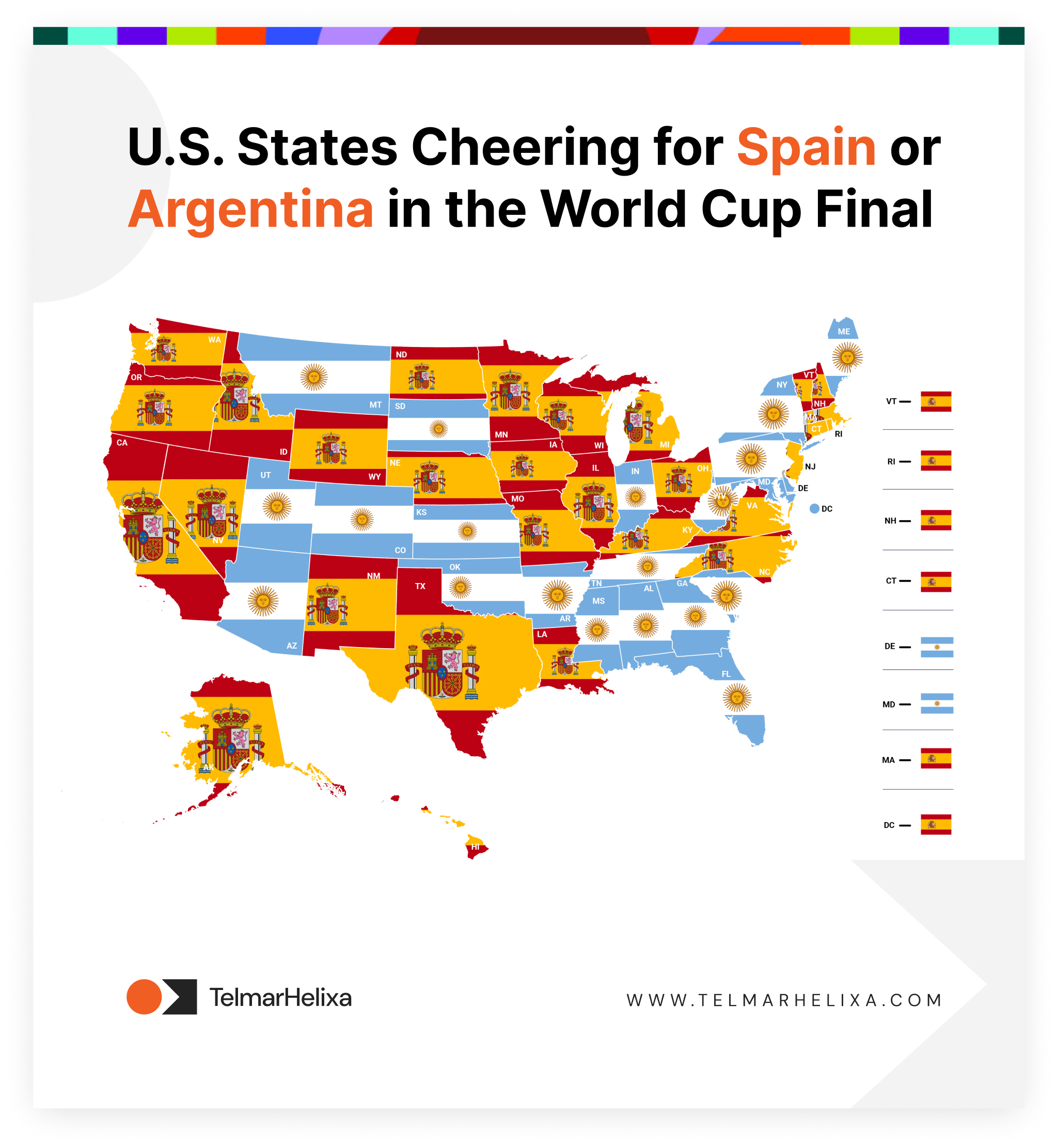
That passion is just as evident in the United States. TelmarHelixa audience intelligence reveals a nation divided ahead of kickoff, with 28 states favoring Spain and 22 states backing Argentina. Spain finds strong support in states including California, Texas, Illinois, and Michigan, while Argentina leads in New York, Florida, Pennsylvania, and Georgia. Rather than following a simple geographic trend, support spans every region of the country, demonstrating how the World Cup has evolved into a truly national event for American fans and highlighting the diverse communities and cultural connections that shape football fandom.
For marketers, the final whistle won't mark the end of the World Cup. Instead, it marks the beginning of understanding everything this global audience has revealed over the past month.
At TelmarHelixa, we believe every conversation, every interaction, and every fan tells a story. The World Cup has once again demonstrated that behind every supporter is a rich picture of behaviors, interests, and affinities that can help brands connect with people more intelligently.
No matter who lifts the trophy on Sunday, the biggest winner will be the brands that continue to understand their audiences long after the celebrations have ended.