

Gen X: The Overlooked Influence
Generation X (or Gen X), born between 1965 and 1980, quietly powers modern culture. They bridge analog loyalty and digital fluency, influencing everything from workplace innovation to shopping habits. Pragmatic yet curious, Gen X is redefining what authenticity, value and balance mean for brands today.
Often overshadowed by Boomers and Millennials, Gen X has become the silent force driving spending, leadership and cultural stability. Understanding the behavior of Gen X reveals how trust, technology and practicality now shape modern markets.
Defining Gen X: The Understated Generation
Born amid recession, political transition and the dawn of personal computing, Generation X grew up navigating volatility, and learned self-reliance from it. They were the first to blend analog childhoods with digital adulthoods, forming a generation fluent in adaptation.
They value authenticity over aspiration. Many watched corporate scandals, dot-com booms and social change unfold in real time, developing a pragmatic outlook that prizes independence, fairness and flexibility.
Gen X now represents roughly one-fifth of the global workforce but holds disproportionate decision-making power, occupying nearly 51% of leadership roles. This duality, underrepresented in media yet dominant in influence, defines the Gen X paradox.
Understanding Gen X: Consumer Behavior Trends
What drives the Gen X consumer?
Caution, curiosity and credibility. Raised during economic swings, Gen X evaluate purchases through a lens of durability and trust. Recent research shows they’re one of the most review-driven cohorts: they routinely read multiple online reviews, compare options and look for detailed product information before buying, both online and in-store. At the same time, they tend to be more skeptical of influencer hype than younger generations, using social media primarily for research and practical inspiration rather than impulse purchases.
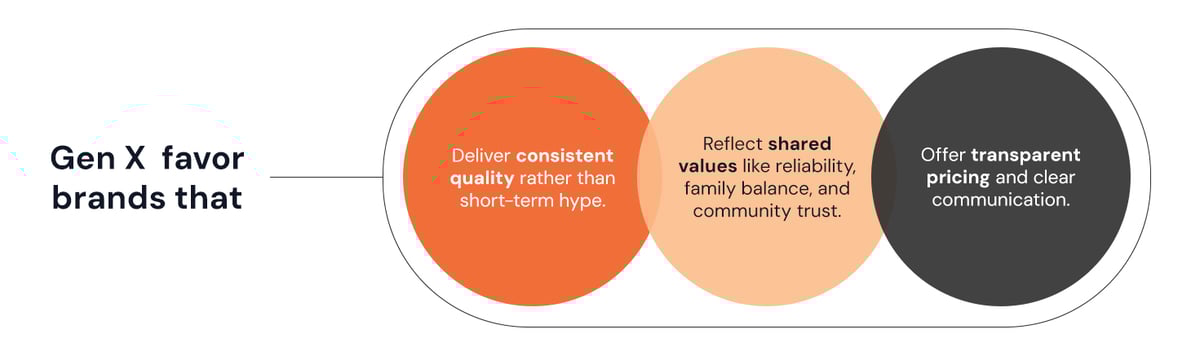
They favor brands that:
- Deliver consistent quality rather than short-term hype.
- Offer transparent pricing and clear communication.
- Reflect shared values like reliability, family balance, and community trust.
Gen X also fuels cross-channel loyalty. They still respond to email and print, but increasingly use mobile for last-mile research and purchase. Their hybrid buying style mirrors their hybrid worldview, blending efficiency with familiarity.
For marketers, this means leaning into proof over promise. Case studies, verified reviews, and meaningful storytelling win Gen X hearts far more effectively than viral content.
How Gen X Influences Modern Shopping Practices
While younger generations dominate trend cycles, Gen X often dominates household decision-making. Recent NIQ data shows they make up roughly 20% of the U.S. population yet account for over 30% of U.S. household spending, frequently acting as primary grocery and purchase decision-makers in multigenerational homes. As a “bridge generation” fluent in both analog and digital worlds, they often set quality and value expectations that influence both Boomers and younger cohorts.
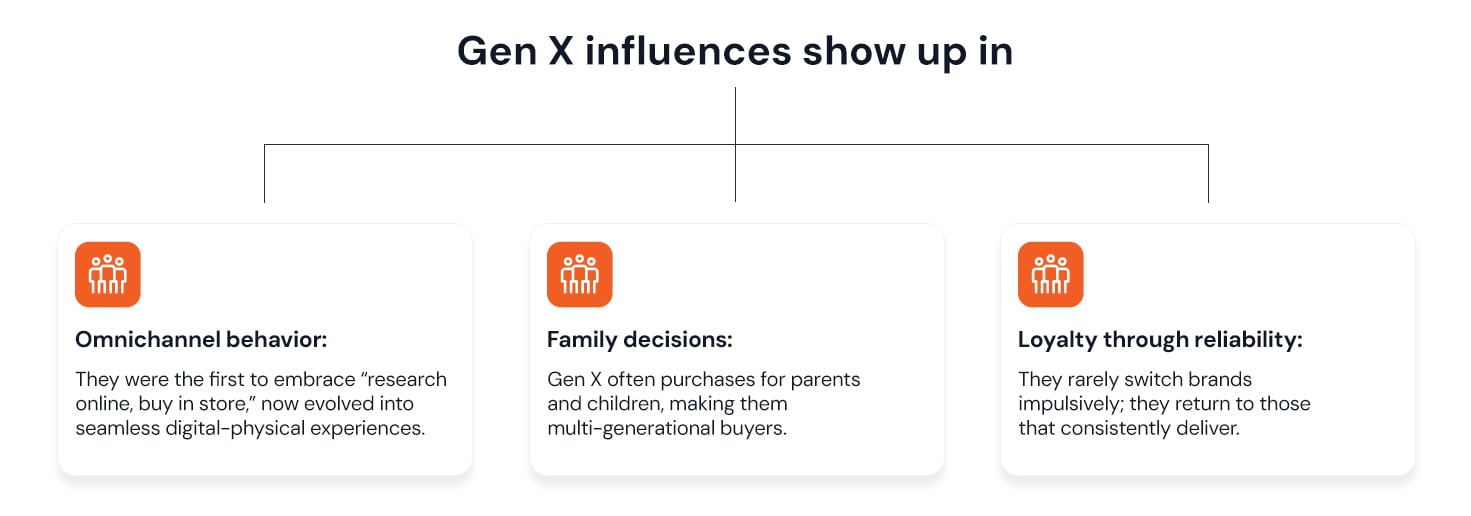
Their influence shows up in:
- Omnichannel behavior: They were the first to embrace “research online, buy in store,” now evolved into seamless digital-physical experiences.
- Family decisions: Gen X often purchases for parents and children, making them multi-generational buyers.
- Loyalty through reliability: They rarely switch brands impulsively; they return to those that consistently deliver.
Gen X shaped expectations for customer support, returns and privacy, forcing brands to modernize service and data ethics. Their behavior has become the benchmark for trust-based commerce in a fragmented digital economy.
Media Consumption and Digital Influence

Gen X may have grown up on MTV, but today they’re one of the most balanced media cohorts. They routinely use subscription and on-demand video services, yet still watch more live TV than younger adults and more video-on-demand than older Boomers and seniors, straddling the line between streaming and traditional TV for news, sports and live events.
Their media footprint includes:
- Streaming: Netflix, Prime Video and Hulu remain top platforms, but niche services (documentaries, lifestyle content) are growing fast.
- Social media: Facebook remains central, yet adoption of LinkedIn and YouTube has surged for professional and educational content.
- News trust: They are selective, favoring established outlets and newsletters over algorithmic feeds.
Unlike Gen Z’s ephemeral scrolling or Boomers’ single-channel habits, Gen X curates media intentionally. They blend nostalgia with newness, creating opportunities for brands that respect attention, not compete for it.
For advertisers, this means planning media campaigns that feel contextual, intelligent, and time-worthy. Podcast sponsorships, smart native integrations and expert-driven storytelling outperform overt targeting.
Gen X in the Workplace: Leadership, Loyalty and Balance
In the workplace, Gen X bridges hierarchy and humanity. They were raised by workaholics yet shaped the modern push for balance.
Leadership ethos: They lead with trust, delegate responsibility and measure success by output, not presence. Many Gen X managers came of age during the shift from rigid office culture to more flexible, tech-enabled work, so they’re often more comfortable with hybrid schedules and giving teams autonomy as long as results are clear and measurable.
Values: They prioritize flexibility, fairness and continuous learning. Having navigated analog systems and digital disruption, they adapt easily to change.
Balance: Gen X drove the normalization of remote work and flexible hours long before it was mainstream. They understand burnout, champion mental health and design teams that blend structure with freedom.
For organizations, empowering Gen X leadership means securing stability during transformation; they know how to operationalize innovation without chaos.
Key Factors Driving Gen X Buying Decisions
|
Factor |
What it Means |
Strategic Implication |
|
Authenticity & Trust |
They cross-verify brands before purchase. |
Invest in transparency, clear sourcing, honest messaging. |
|
Financial Prudence |
Prefer long-term value to novelty. |
Emphasize ROI, durability, and purpose. |
|
Digital Fluency |
Confident online shoppers with privacy awareness. |
Optimize UX and personalization ethically. |
|
Work-Life Integration |
Seek products that simplify daily routines. |
Market convenience as empowerment, not indulgence. |
|
Community & Legacy |
Value meaningful brands supporting local or global causes. |
Connect actions to impact. Show not tell. |
As the generation that learned to save, pivot careers and manage crises, Gen X doesn’t just spend; they evaluate. Winning their loyalty means designing experiences that align with how they think, not just what they buy.
The Gen X Legacy: Insights for Marketers and Agencies
Generation X proves that influence isn’t always loud. Their habits have quietly re-architected marketing itself: from data transparency to omnichannel design and authentic storytelling.
They remind us that sustainable growth isn’t about virality; it’s about consistency, clarity and cultural resonance. For marketers, that means:
- Reframing mid-life consumers as modern multipliers. They’re shaping both younger and older purchasing behavior.
- Creating content ecosystems, not campaigns. Meet them where they research, learn and lead conversations.
- Designing trust at every touchpoint. Privacy, performance and purpose are the new persuasion levers.
As leadership researchers at DDI note, Gen X leaders are the “critical bridge” between Baby Boomers and Millennials, translating between legacy structures and digital-age expectations. Overlooking them means underestimating the cohort that quietly connects culture, technology and execution in most large organisations.
Reach the Overlooked Generation X
Generation X represents more than a demographic; they are the stabilizing core of modern culture. They blend analog sensibility with digital agility, turning complexity into competence.
For brands and marketers, understanding Gen X isn’t nostalgia. It’s strategy. Their behaviors define the balance between automation and authenticity, innovation and intention. Recognize their influence, respect their intelligence and your message will find one of the most powerful yet overlooked audiences of our time.
FAQs
Q1: What defines Gen X?
Born between 1965 and 1980, Gen Xers are adaptable, skeptical and self-reliant. They grew up analog but mastered digital.
Q2: How do Gen X consumers make buying decisions?
They research thoroughly, trust peer reviews and prioritize product reliability and long-term value.
Q3: What media do Gen X prefer?
Balanced consumption. Streaming for entertainment, traditional outlets for news and curated digital content for learning.
Q4: Why is Gen X important in the workplace?
They lead with empathy and efficiency, bridging traditional management and hybrid innovation.
Q5: How can brands connect with Gen X?
Be clear, credible and considerate. Prioritize truth over trend and substance over spectacle.
Next Steps
The advertising industry has more data than ever, but execution is more challenging. Brands, agencies, and media owners face challenges connecting audience insights with media planning, optimizing cross-channel campaigns, and navigating a fragmented landscape to truly connect with their Gen X audience.
Our latest market research report, "2025 Advertising Industry Trends and Insights" reveals what’s holding advertisers back — and what they’re doing to stay ahead.